


When the Show Doesn't Go On: The Hidden Logistics Crisis Behind Major Event Cancellations
The cancellation of the Wireless Festival in April 2026, following the UK government’s decision to block Kanye West from entering the country, quickly became headline news, with many people heading to their social media profiles to vent.
Public reaction focused on the obvious, such as ticket refunds, disappointed fans, and the wider cultural and political debate. Across social media and forums, the conversation focused on whether the decision to block Kanye was justified and importantly, what it meant for the future of live events.
But behind that visibility, a very different situation was unfolding, one that received far less attention, yet required immediate action. Because when a major event collapses at short notice, someone has to move a lot of stuff, and very quickly.
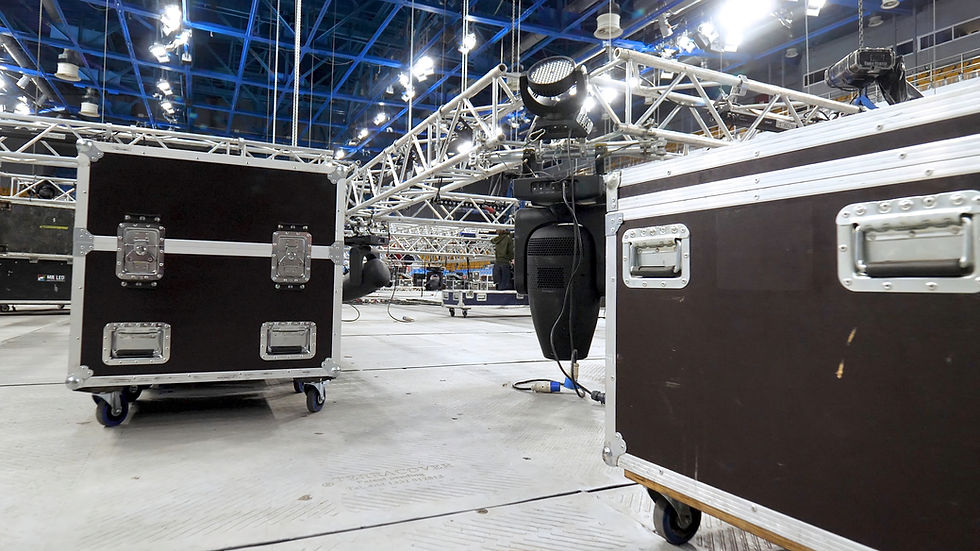
The Logistics Problem Nobody Talks About
Large-scale events like Wireless Festival are not just singular productions. They are complex, and tightly coordinated supply chains.
Staging contractors, AV suppliers, lighting and rigging specialists, catering providers, merchandise distributors, medical teams, security infrastructure, brand activation agencies and corporate sponsors all operate within tightly coordinated timelines. Deliveries are scheduled, access is booked, and installation follows a defined sequence.
In this case, presale tickets had already sold out, and general sale was imminent when cancellation was confirmed. Many suppliers were days, and in some cases hours, away from beginning site build.
When that decision lands, everything changes instantly. Goods already in transit must be stopped or redirected. Equipment prepared for installation must be returned. Branded merchandise risks losing value by the hour. Infrastructure already delivered may need to be removed within strict venue deadlines.
Nothing stays where it is. Everything needs to move. This is exactly the scenario where same-day and emergency courier services become essential.
From Event Build to Emergency Breakdown
Event logistics are normally planned months in advance. Delivery schedules are fixed, access is controlled, and installation follows a very structured and comprehensive process. Cancellation of the event removes that structure instantly. Instead of scheduled deliveries, suppliers are dealing with urgent collections. Instead of one destination, goods need to be sent to multiple locations, such as warehouses, alternative venues, storage facilities or even new buyers, just so the vendors don’t lose out on any funds they’ve already parted ways with.
The supply chain breaks down into a series of immediate, unplanned movements, whilst all under time pressure.
The First 48 Hours: Where Timing Defines the Outcome
In the first 24 to 48 hours after cancellation, speed becomes the priority for many vendors. Production companies need staging, lighting and sound equipment returned or reassigned. Delays also increase hire costs and reduce availability for other projects. Merchandise suppliers need stock recovered quickly to preserve resale value. Event-specific goods have a limited commercial window.
Catering providers must deal with perishable and non-perishable stock. Sponsors need activation materials and display assets collected and accounted for. At the same time, venues, particularly in cities like London, enforce strict clearance deadlines, meaning infrastructure must be removed within defined timeframes.
This creates immediate demand for logistics that prioritise speed, flexibility and direct delivery. And whilst many standard delivery networks are not designed for this, same day specialist courier services from Red Rocket Couriers are.
Why Traditional Delivery Models Break Down
Most standard logistics networks are built around predictability. Routes are optimised in advance, loads are consolidated, and delivery schedules are fixed. Whilst this works efficiently under normal conditions, it lacks the flexibility required during any potential disruption.
When an event is cancelled, requirements change rapidly. Collection points shift. Delivery locations change. Goods need to move immediately and directly. A pallet network cannot prioritise urgent individual jobs. Next-day services are too slow. Royal Mail don’t have the infrastructure in place for one hour pick up slots. Hub-based systems introduce delays that are not acceptable in time-critical situations.
What’s required instead is dedicated, direct transport, a model where goods move from collection to delivery without delay, diversion or dependency on wider network capacity.
The Role of Same Day and Time-Critical Courier Services
This is where specialist providers such as Red Rocket Couriers become essential. In these situations, the objective is not simply to move goods, but to restore order and structure to a very fragmented supply chain. That means responding in real time, collecting at short notice, and delivering directly to wherever those goods are now needed. Time-critical courier services operate on a dedicated model. Vehicles are assigned to individual jobs. Collections happen at short notice. Deliveries are made directly, without passing through depots.
With a nationwide network of drivers and 24/7 availability, with pick up within 60 minutes, providers like Red Rocket can handle:
· Urgent multi-point collections across cities or regions
· Direct transport of high-value or sensitive equipment
· Rapid redistribution of merchandise and stock
· Immediate recovery of hired assets to avoid penalties

Short-Notice Logistics: A Financial Necessity, Not a Convenience
For many suppliers, speed is directly linked to cost. Equipment hire charges continue until items are returned. Contracts may include strict timelines for collection or redeployment. Storage limitations can create immediate pressure to clear stock, and most importantly, delay can reduce or eliminate the value of goods. Event-specific merchandise, for example, often has a narrow resale window. If it is not recovered and redistributed quickly, it becomes unsellable. This is why same-day collection and delivery are often the difference between recovery and loss.
Where the Impact is Felt Most
Event cancellations create immediate pressure across multiple sectors. Merchandise suppliers need stock recovered quickly. AV and staging companies deal with high-value equipment that must be returned securely. Medical providers operate within compliance requirements that require prompt handling.
Corporate sponsors and brand activation teams must recover installations, displays and marketing assets efficiently, often across multiple locations. Catering and hospitality providers also face additional urgency due to the nature of their stock, as it can’t just sit there unused. Across all these sectors, the common factor is the same. Either move that stock quickly and recover some financial loss or absorb that cost.
Beyond Festivals: A Broader Operational Pattern
Although the cancellation of Wireless Festival is a high-profile case, the same pattern occurs across multiple industries. Film and television productions regularly face location changes or delays that require rapid movement of equipment. Retail supply chains encounter disruption that leaves stock in the wrong place at the wrong time. Manufacturing operations may need components redirected urgently to avoid downtime.
In each case though, the ability to move goods quickly and reliably determines how effectively a business can respond.
Building Resilience Through Logistics Planning
These situations are changing how businesses treat logistics. It’s no longer something handled after last minute changes or decisions are made. It’s planned alongside operations, procurement and delivery. For companies working with fixed timelines, high-value goods or event-based activity, the risk is very clear; if something changes, delays cost money immediately.
Because of this, many now build contingency into their logistics from the outset, choosing Red Rocket Courier services to provide this service for them. That typically means having access to a courier service that can respond immediately, collecting within 60 minutes, delivering direct, and handling changes without delay.
How Red Rocket Couriers Supports Critical Situations
With over 3,000 drivers across the UK and a 24/7 dispatch team, the focus is on rapid response, direct transport, and reliability under pressure. Whether it’s a single urgent collection or multiple coordinated movements across different locations, the objective remains consistent. To move goods quickly, securely, and without unnecessary delay.
For businesses affected by event disruption, this capability allows them to:
· Recover assets before additional costs are incurred
· Maintain operational continuity
· Redirect stock to new opportunities
· Minimise financial impact
Ultimately, situations like this highlight something most businesses only realise once disruption happens. Logistics is not just about moving goods from A to B. It is about protecting timelines, reducing financial loss and keeping operations moving when plans suddenly change. Whether it is a cancelled festival, delayed production, urgent stock movement or last minute operational issue, the ability to respond quickly becomes the difference between control and chaos. That is why businesses across the UK continue to rely on Red Rocket Couriers for same day, direct delivery when timing, flexibility and rapid response matter most.


